Walking into a tire shop, all you see is a wall of rubber with labels that don’t tell you much. “Winter” and “all season” might sound similar, but the rubber, tread design and temperatures you can drive in are not the same. In Calgary, a chinook swings us from -20°C to above freezing within a day so picking the wrong set is more important than most drivers realize.
At My Calgary Mechanic, our goal isn’t to push you into buying the most expensive options on the shelf. When you book a tire service with us, we help you find what fits how you drive. Today, we’ll compare winter and all season tires so you know the difference when it’s time to change.
Table of Contents
ToggleWhat Are Winter Tires?
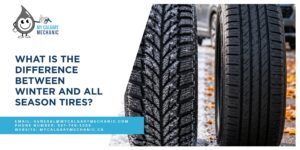
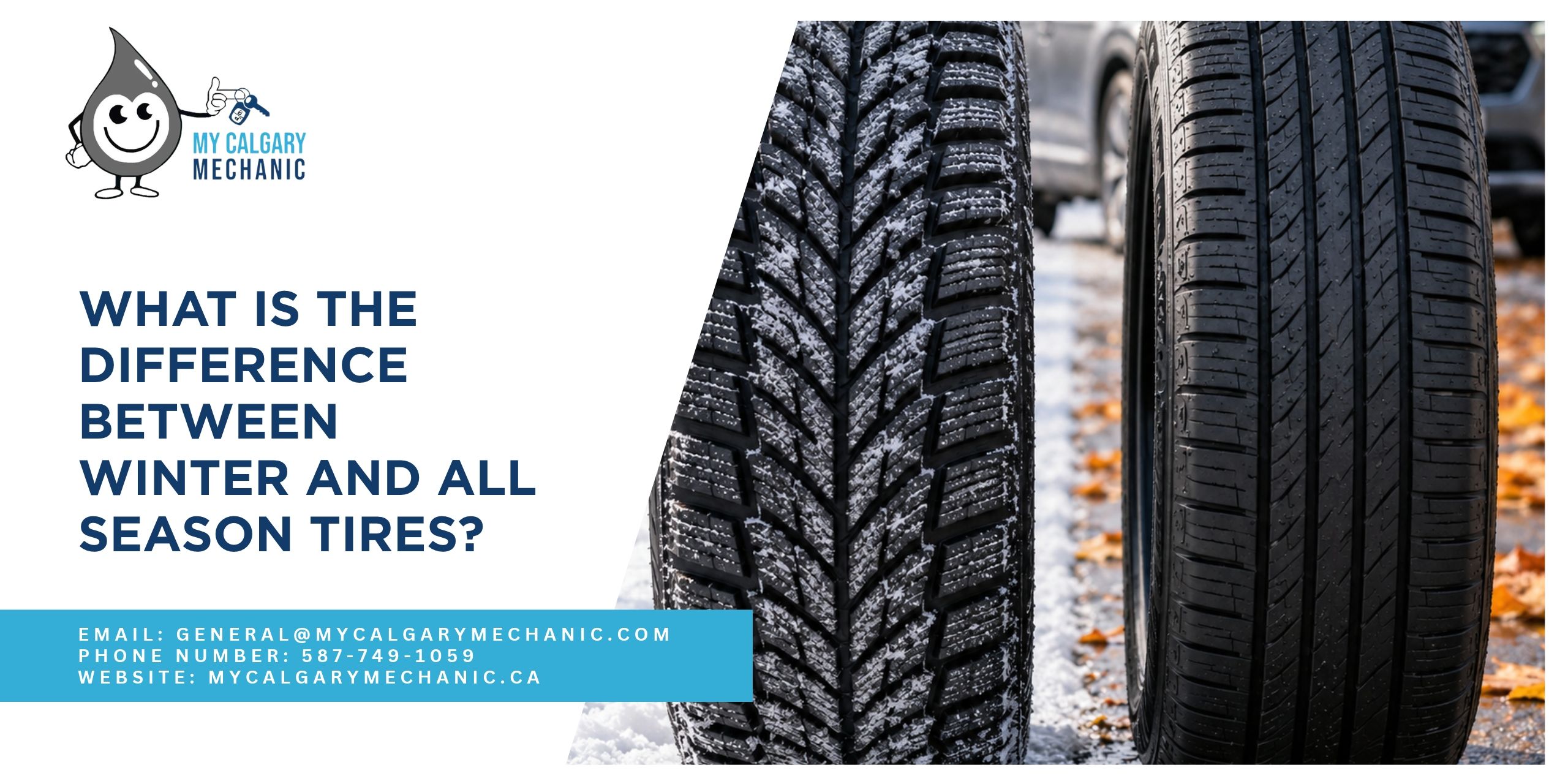
Winter tires are built with cold weather, snow and ice in mind. Using a softer rubber compound, they remain flexible when temperatures drop and allow the tire to grip the road instead of stiffening up and sliding. Their tread has deeper grooves and thousands of tiny slits known as sipes that bite into snow and channel slush away.
When shopping for winter tires, look for the three-peak mountain snowflake (3PMSF) symbol on the sidewall. The marking indicates the tire has met a standard for severe snow performance.
What Are All Season Tires?
All season tires fall into the middle-ground. Their rubber compound and tread pattern are made to handle various conditions: dry roads, rain and light snow. They’re quieter than their winter counterparts and last longer in warm weather, which is why several vehicles come with them from the factory.
Remember, “all season” doesn’t mean “all conditions.” When the deep cold sets in, the rubber hardens, reducing traction, especially on ice and packed snow.
What Are the Key Differences?
At first glance, it’s easy to confuse all season and winter tires, but they are not the same. The key differences include:
- Rubber Compound: Winter tires remain soft and grippy in the cold. All season rubber stiffens as temperatures drop. Note that traction begins dropping off when temperatures start going below 7°C.
- Tread Design: Winter tires have deeper, more aggressive tread with extra sipes for snow and ice. All season tread is shallower and built to balance wet and dry handling.
- Braking and Handling: On cold or icy pavement, winter tires generally stop shorter and have more control when turning corners. In warm, dry conditions, all season tires handle better and wear slower.
- Cost and Lifespan: Winter tires have a higher upfront cost, but by swapping between a winter and summer or all season set, which helps each set last longer. All season tires cost less upfront, but you will need to replace them sooner if you drive them hard through winter.
What About All-Weather Tires?
Then, there’s all-weather tires. They aren’t the same as standard all season tires. All-weather tires also have the 3PMSF symbol, which means they meet the severe snow standard, but they can stay on year-round. They can work for drivers wanting the winter capability without changing out tires twice a year, but may not match a dedicated winter tire in harsh conditions
Which One Makes Sense for Calgary Drivers?
Calgary winters are long and unpredictable. Between the real cold, packed snow, ice and chinooks that melt it all, Mother Nature keeps us on our toes. Alberta doesn’t legally require winter tires. That said, for most drivers, a dedicated winter set will provide the best traction and stopping power when it matters most.
All season tires may be fine if you mostly drive in the city, but it’s important to stay off the road during the worst storms and accept the tradeoffs. If you prefer an option that lands in the middle, look into all-weather tires.
What Do We Check Before We Recommend Anything?
Before suggesting a tire setup, we consider:
- How often and where you drive in winter, including highway, rural or in-city commutes
- Your vehicle’s drivetrain and what it came with
- Your current tire condition and remaining tread
- Your budget and how you feel about seasonal swaps
If your current tires will let you navigate the winter roads safely, we tell you. When it’s time for a change, we explain why.
Wondering Which Tires You Need?
Winter tires provide the best grip in the cold. Meanwhile, all season tires provide convenience and value and all-weather tires sit somewhere in between. The right choice for your needs comes down to your driving, your vehicle and comfort level in winter conditions. At My Calgary Mechanic, we’re honest with you. We let you know what setup makes the most sense for you.
Tire questions? Stop by the shop or contact us to book a tire service today.