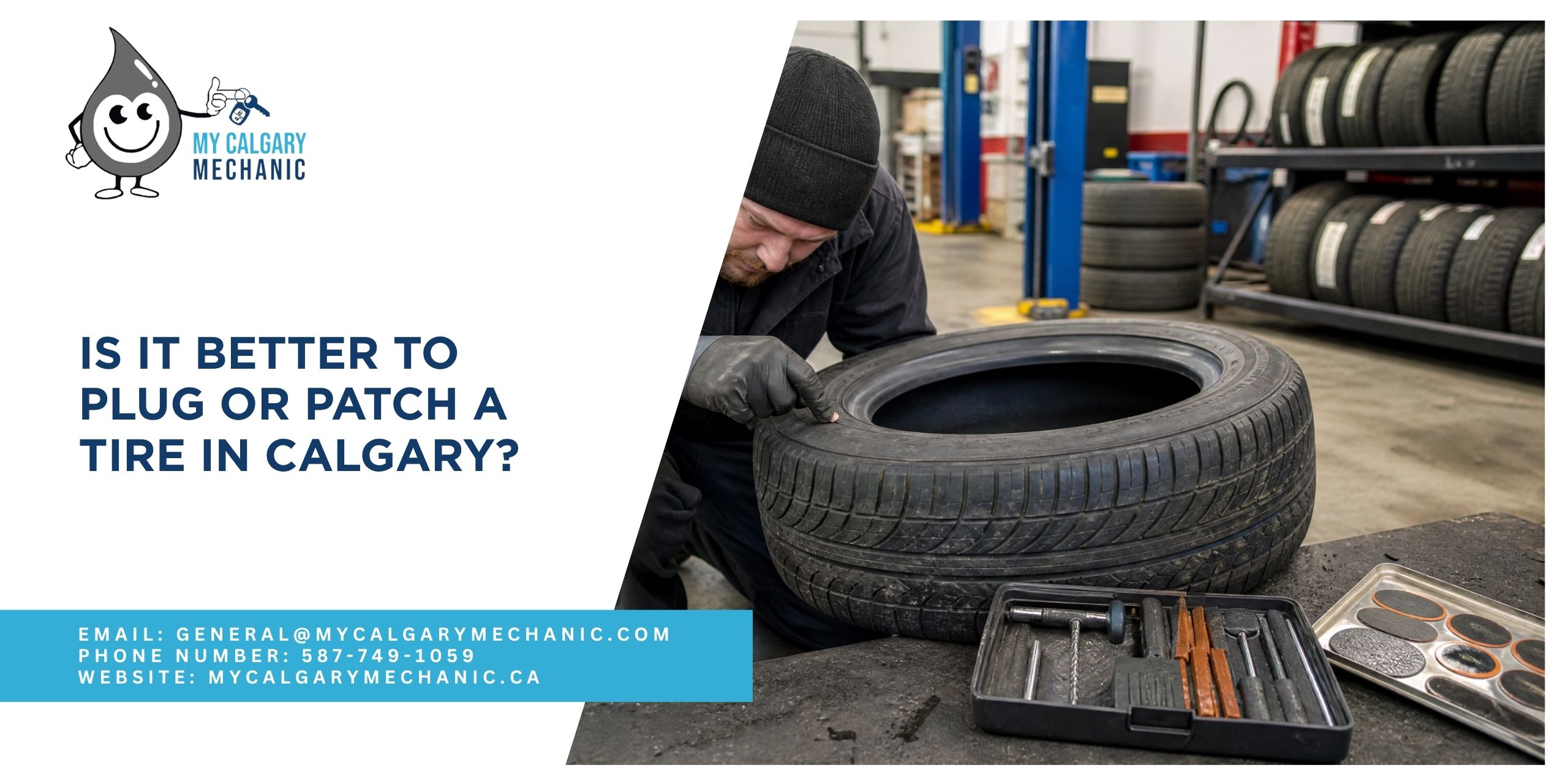
So you’re driving down the road and your tire goes flat! If you need a repair, you’ll likely hear about plugs and patches, but they’re not the same thing. Which works better?
At My Calgary Mechanic, our goal is to help you make the right move for your vehicle. Here’s what you should know before you decide.
Table of Contents
ToggleWhat’s the Difference Between a Plug and Patch?
While they both offer a solution to a punctured tire, they are different. Here’s a breakdown:
- Plug: Inserted directly into the puncture from the outside of the tire without taking the wheel off the vehicle, it’s fast and requires minimal setup. That said, it only seals the outer surface of the tire, the inside of the tire remains unsealed.
- Patch: The tire needs to be removed from the wheel to properly clean, prepare and seal it. It takes more time to address the puncture from the inside out, but it’s a more complete repair.
There’s also the option of a patch-plug combination, which seals the inside with a patch while filling the puncture channel with a plug stem. It’s one of the most thorough repair methods available.
Which Option is Better?
Usually, a patch or patch-plug combination is the way to go. Let’s discuss why.
A plug on its own doesn’t fully seal the inner liner of the tire. Over time, Calgary’s temperature swings and highway driving conditions make a difference. An unsealed inner liner lets air and moisture in, which leads to further damage or even a slow leak that’s hard to diagnose.
A proper patch or patch-plug repair completely seals off the tire, holds up under pressure and is recommended by tire manufacturers.
Meanwhile, a plug is a useful temporary fix in a roadside emergency that gets you to the shop safely. It should never be used as a permanent solution.
What Impact Do Calgary Conditions Have?
Calgary drivers deal with conditions that put extra stress on tire repairs. Chinook temperature swings cause repeated expansion and contraction in the rubber so it’s important to know that although a plug repair may hold fine in a stable climate, it may work loose faster here. Road salt and moisture accelerate inner liner damage that a plug leaves exposed. Pothole season is when tires will take impacts that test the integrity of any repair.
Doing the job properly the first time matters. It stops the same problem from coming up again at the worst time.
What Makes a Repair Invalid Regardless of Method?
Sometimes, a plug or patch won’t solve problems. Here are times when replacement is the right call:
- Sidewall or Shoulder Damage: These areas flex too much under load for any repair to last.
- Punctures Larger Than 6mm: This is beyond the safe repair threshold.
- Treads Worn Below 2/32”: According to Transport Canada, this is Alberta’s legal minimum. Repair only delays replacement.
- Multiple Repairs in the Same Area: Overlapping repairs aren’t structurally reliable.
- Bulging, Cracking or a Tire Driven Flat: Structural damage is something surface repair can’t fix.
Is your tire experiencing any of these issues? Replacement is always the better choice.
What Should You Expect at My Calgary Mechanic?
When you bring a punctured tire into the My Calgary Mechanic shop, we take off the tire and inspect it before making any recommendations. Sometimes, a patch-plug repair is the right move. On the other end, if replacement makes more sense, we tell you why.
Need a tire plugged or patched? Contact us to book your tire inspection appointment today!